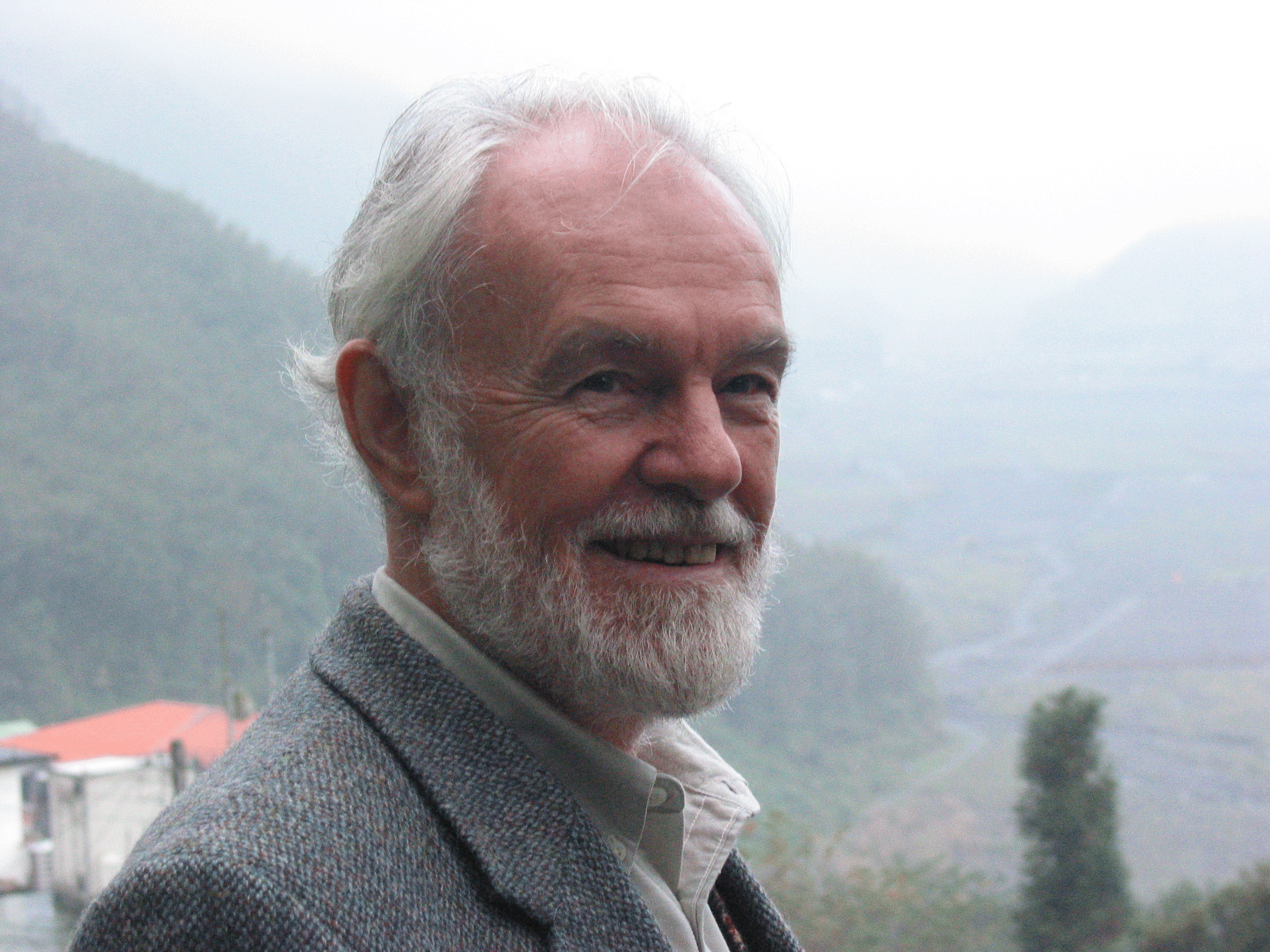
This Friday, January 27th, the first video from the new Reading Marx’s Capital Volume II series will debut on this website. The sequel to Reading Marx’s Capital Volume I, this free semester-long open course consists of a close reading of the text of Marx’s Capital Volume II (plus parts of Volume III) in 12 video lectures by Professor David Harvey. Subsequent videos will be available every one to two weeks. Initially the videos will be available on YouTube. Additional file formats and podcasts will be available soon.
In an article in the New York Times on 5 February 2011, entitled ‘Housing Bubbles Are Few and Far Between’, Robert Shiller, the economist who many consider the great housing expert given his role in the construction of the Case-Shiller index of housing prices in the United States, reassured everyone that the recent housing bubble was a ‘rare event, not to be repeated for many decades’. The ‘enormous housing bubble’ of the early 2000s ‘isn’t comparable to any national or international housing cycle in history. Previous bubbles have been smaller and more regional’. The only reasonable parallels, he asserted, were the land bubbles that occurred in the United States way back in the late 1830s and the 1850s. This is, as I shall show, an astonishingly inaccurate reading of capitalist history. The fact that it passed so unremarked testifies to a serious blind spot in contemporary economic thinking. Unfortunately, it also turns out to be an equally blind spot in Marxist political economy.
Property market booms and busts are inextricably intertwined with speculative financial flows and these booms and busts have serious consequences for the macro-economy in general as well as all manner of externality effects upon resource depletion and environmental degradation. Property booms and capitalist crises also refocus politics on the city as a terrain of anti-capitalist struggle. The history of urban struggles, from the Paris Commune through the Shanghai Commune, the Seattle General Strike, The Tucuman uprising and the Prague Spring to the more general urban-based movements of 1968 (which we now see faintly echoed in Cairo and Madison) is stunning. But it is a history that is also troubled by political and tactical complications that have led many on the left to underestimate and misunderstand the potential and the potency of urban-based movements, to often see them as separate from class struggle and therefore devoid of revolutionary potential. And when such events do take on iconic status, as in the case of the Paris Commune, they are typically claimed as one of ‘the greatest proletarian uprisings’ in world history, even as they were as much about reclaiming the right to the city as they were about revolutionizing class relations in production.
This video shows David Harvey speaking atop Federal Hill overlooking Baltimore’s Inner Harbor at the opening event of the City From Below conference in March 2009. In this talk, Professor Harvey revisits and updates his famous essay A View from Federal Hill, which appeared in The Baltimore Book and was reprinted in Spaces of Capital. The conference was organized by the Baltimore Development Cooperative, Red Emma’s bookstore, and the Indypendent Reader.
The End of Capitalism?
Dr. S.T. Lee Distinguished Lecture in the Humanities
Penn Humanities Forum
Harrison Auditorium
Penn Museum, 3260 South Street
Philadelphia | 5:00-6:30 pm
Free and open to the public. Pre-registration required.
Wednesday, November 9th 2011 Walking with the Comrades The Center for Place Culture and Politics Presents
A reading by Arundhati Roy
Followed by a discussion with David Harvey
The Proshansky Auditorium
CUNY Graduate Center
365 Fifth Ave at 34th Street
New York | 7:00–9:00 pm
Free and open to the public
Wednesday, November 30, 2011 The End of Capitalism?
Dr. S.T. Lee Distinguished Lecture in the Humanities
Penn Humanities Forum
Harrison Auditorium, Penn Museum, 3260 South Street
Philadelphia | 5:00-6:30 pm
Free and open to the public. Pre-registration required.
Monday, October 24, 2011 Social Injustice and Accumulation by Dispossession
Lecture Series on Geography and Contemporary Theoretical Debate
Auditorio Salvador Allende
Sede Central UAHC (Condell 343, Providencia) 9: 00 hrs.
Announcing a new project – the Capital Lectures Transcription and Translation Project. Since first posting the Capital Volume 1 lectures online, many people have contacted the site hoping for subtitles in their native languages. In order to meet this demand, we first need an accurate English transcription of the lectures. We have created a first draft of the English transcription with timecodes via YouTube’s machine transcription service. We need volunteers to correct the machine transcription. After this is complete, volunteer translators will translate the transcript into other languages. After these are complete, they will be uploaded to YouTube’s subtitles service and made available. Can you help get this project started by spending some time correcting the transcription of the English lectures? If so, please join the project here.
A close reading of the text of Karl Marx's Capital in free video lectures by David Harvey. Start here
David Harvey is a Distinguished Professor at the Graduate Center of the City University of New York (CUNY), Director of The Center for Place, Culture and Politics, and author of numerous books. He has been teaching Karl Marx's Capital for over 40 years. Read his CV.